

Is The Luxury Market Immune to Interest Rates?
When interest rates began rising in 2022, many experts predicted a broad decline in home values across all price ranges. While higher borrowing costs have certainly affected the housing market, the reality in central Denver has been much more nuanced. Looking at the data since the first rate hike, one thing has become increasingly clear: not all market segments have behaved the same way.
In fact, central Denver's luxury market, the top 25% of home sales by price, has appreciated approximately 3.9% since interest rates began climbing. By contrast, homes in the lower-priced quartile have experienced a 3.0% decline over the same period.
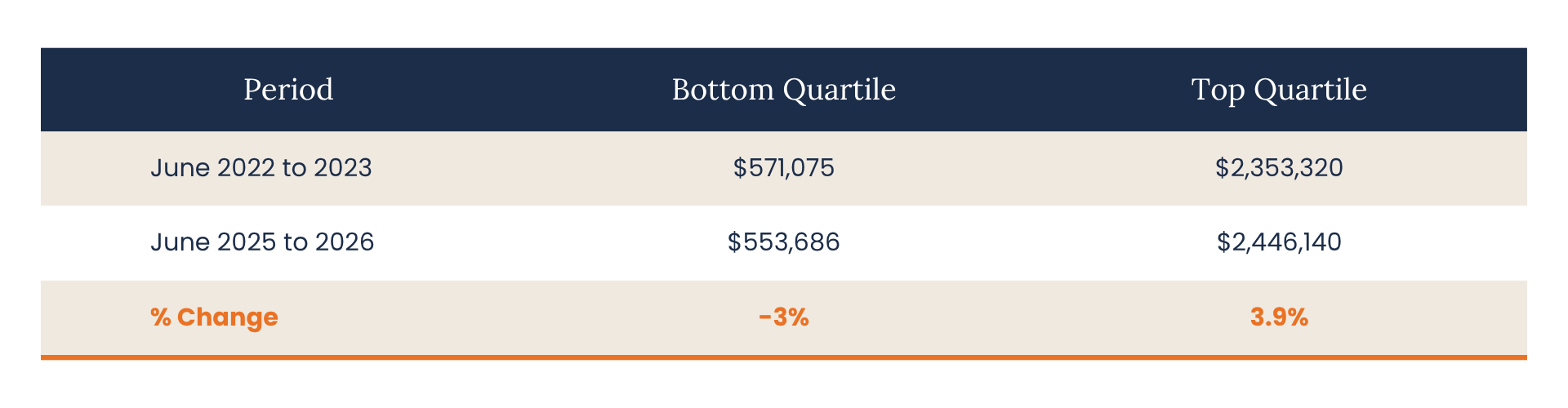
At first glance, this may seem surprising. After all, higher interest rates generally reduce affordability and purchasing power. However, the impact of rising rates is not felt equally across all buyer groups.
Luxury buyers are often less dependent on financing and more likely to have substantial equity, investment assets, or cash reserves. While interest rates still matter, they tend to have less influence on purchasing decisions at the upper end of the market. Many affluent buyers are making lifestyle-driven decisions rather than stretching to meet a monthly payment threshold.
The opposite is often true in the entry-level and lower-priced segments. Buyers in these price ranges are typically more sensitive to changes in monthly payments. As rates rose, affordability declined significantly, reducing the pool of qualified buyers and creating downward pressure on prices.
The result is a market that, on average, appears relatively stable, but beneath the surface, performance can vary dramatically depending on where a property falls within the pricing spectrum.
What This Means for Sellers
If you're selling a luxury home, the data suggests there is still meaningful demand from well-qualified buyers. While homes may take longer to sell than they did during the frenzy of 2021 and early 2022, values have generally remained resilient. Strategic pricing, presentation, and marketing remain critical, but luxury sellers have largely been insulated from the price erosion experienced in other segments.
For sellers in more affordable price ranges, the pricing strategy has become even more important. Buyers are carefully evaluating monthly payments and often have less budget flexibility. Homes that are move-in ready, priced correctly, and presented well continue to sell, but overpricing can quickly reduce buyer interest and lead to longer market times.
What This Means for Buyers
For luxury buyers, today's market may offer opportunities that were difficult to find at the peak of the pandemic. Inventory has improved, competition is generally more manageable, and buyers often have greater negotiating leverage than they did a few years ago.
For buyers in lower price ranges, affordability remains a challenge, but there is good news. With values remaining relatively flat or slightly lower than their peaks in many neighborhoods, buyers may face less competition than they did during the ultra-competitive years of 2020–2022.
The Bottom Line
The Denver market is not one market—it is many markets operating simultaneously. While overall price trends may suggest stability, a homeowner's or buyer's experience can vary significantly depending on their price point. Understanding which segment of the market you're in is essential to making informed decisions and setting realistic expectations.
As always, if you're considering buying or selling, I’m happy to help you understand how today's market conditions specifically affect your home, your neighborhood, and your goals.
If you're in the market to buy/sell a home, or you just want to chat about real estate, let’s connect! I’m happy to share market resources, vendor referrals or anything else that would be helpful in your journey.